Hot Keywords:Conveyor DishwasherDishwasher
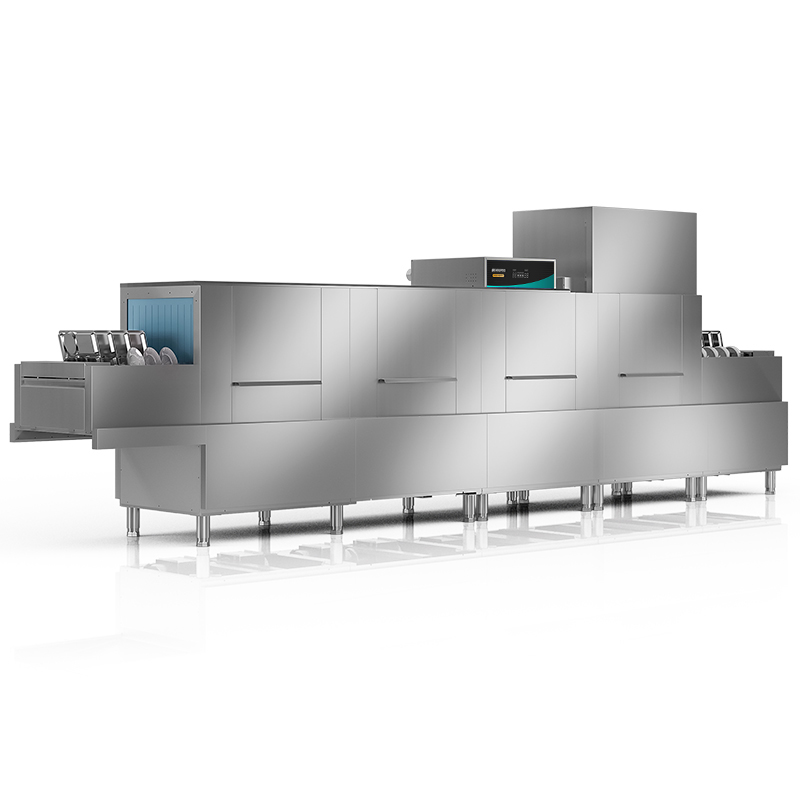
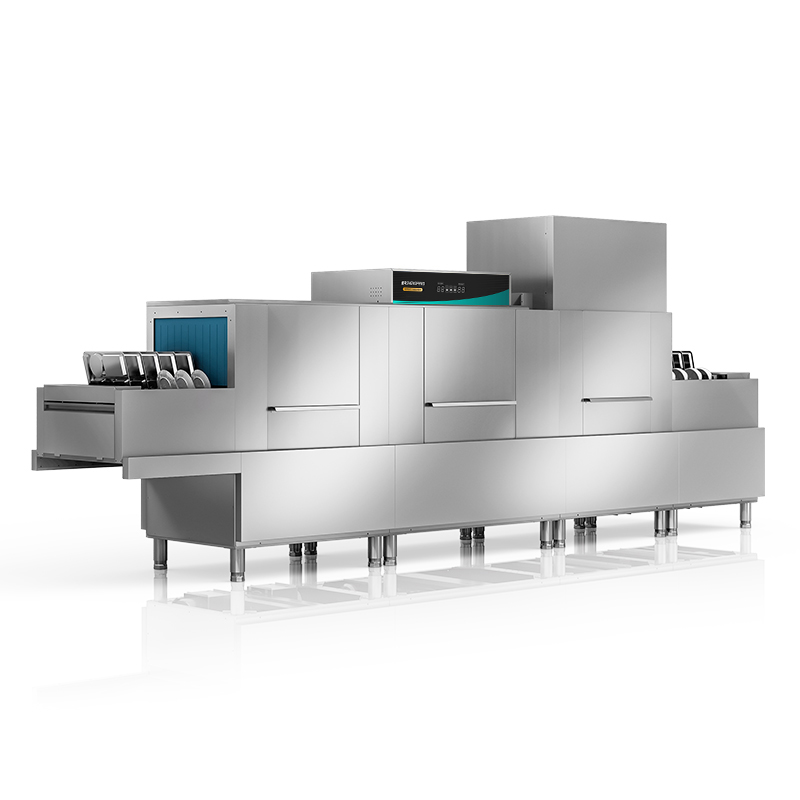
As a core dining venue for teachers and students, the efficiency and hygiene standards of tableware cleaning and disinfection in school canteens are directly related to the food safety and physical health of all teachers and students, as well as the canteen’s operating costs and management efficiency. The traditional manual cleaning model suffers from low efficiency, substandard cleaning and disinfection, severe water waste, and high labor costs, making it difficult to meet the large-scale, high-frequency tableware processing needs of school canteens.
Based on the scenario characteristics of school canteens and the dining demands of canteens of different sizes, this solution provides a full-process dishwasher solution covering equipment selection, installation and commissioning, personnel training, and operation and maintenance support. It achieves "efficient, hygienic, energy-saving, and hassle-free" tableware cleaning, helps standardize and intelligentize school canteen operations, and strengthens the food safety line on campus.
Baskets per hour – Standard washing basket size: 500*500mm. The number of dishes per basket depends on dish size; the average conversion is 18 dishes per basket.
Dishes per hour – A 10-inch plate (250mm diameter) fits 18 per basket; a 6-inch plate (150mm diameter) fits 27 per basket.
Reduced breakage rate of ceramic ware
Lower staffing levels and wage & welfare expenses
Detergent, energy, and water costs
Disinfection costs
Consistent cleaning and disinfection results
Spare parts, maintenance, and other related expenses after equipment failure
Water supply – Check if inlet water pressure is stable, if water quality is clean, whether a filter or water softener is needed, and if the supply is cold or hot water.
Electricity – Review the building’s power layout to confirm sufficient power capacity and consistent power supply standards.
Steam – Evaluate whether adequate steam volume is available and the condition of the boiler.
Time – For tight washing schedules, choose a larger, higher-speed model.
Standard washing basket: 500×500 mm
10‑inch plate (250 mm): 18 pieces per basket
6‑inch plate (150 mm): 27 pieces per basket
Per capita tableware: 4 pieces per person per meal
| Canteen Scale | Daily Diners | Daily Washing Volume | Recommended Hourly Capacity | Suitable Machine Type |
|---|---|---|---|---|
| Small (Primary/Kindergarten) | < 300 | < 3,600 pieces | 50–100 baskets/h | Undercounter / Hood Type |
| Medium (Middle/Vocational) | 300–1,000 | 3,600–12,000 pieces | 150–300 baskets/h | Rack Conveyor Type |
| Large (University) | > 1,000 | > 12,000 pieces | ≥ 500 baskets/h | Long‑Line / Tunnel Type |
Daily washing volume = 1,000 × 4 × 3 = 12,000 pieces/day
Peak lunch (1.5 hours): 4,000 pieces ÷ 1.5 h ≈ 267 baskets/h → Select 300 baskets/h model
| Machine Type | Suitable Scale | Price Range (USD) | Core Configuration |
|---|---|---|---|
| Undercounter / Hood Type | < 300 diners | $1,450–$4,340 | Single tank, manual/semi‑automatic, no drying |
| Rack Conveyor Type | 300–800 diners | $4,340–$11,580 | Continuous basket feeding, high‑temp rinse, optional drying |
| Long‑Line Type (4–6 m) | 800–2,000 diners | $11,580–$28,940 | Automatic de‑slagging, water recycling, integrated drying |
| Premium Long‑Line / Tunnel Type | > 2,000 diners | $28,940–$50,650 | Dual spraying, variable frequency, smart control, dual track |
Water softener & filtration system: $720–$2,890 (mandatory in hard‑water areas)
Water, electricity & steam renovation: $1,160–$4,340
Installation, commissioning & training: $720–$1,450
Washing baskets & accessories: $430–$1,450
Water, electricity & steam: $1,160–$2,170/year
Detergent & rinse agent: $870–$1,740/year
Maintenance & spare parts: $430–$1,160/year
Labor: Only 1–2 operators needed; annual labor savings: $11,580–$28,940 (vs. 6–10 manual workers)
Small canteen: Total investment $4,340–$8,680, payback 1–1.5 years
Medium canteen: Total investment $11,580–$21,700, payback 1.5–2 years
Large canteen: Total investment $28,940–$57,880, payback 2–3 years
Calculate capacity first: Reserve 20% surplus for peak demand to avoid congestion.
Prioritize energy‑efficient models: Water‑recycling + variable‑frequency designs save 30%+ on annual utilities.
Budget allocation: Equipment 70%–75%, supporting & installation 25%–30%.
Long‑term ROI: For large canteens, long‑line machines reduce total 3‑year costs by 50%+ vs. manual washing.
Previous:First
Next :Dishwasher Solutions for Tableware Disinfection Companies
Zhengzhou Taywash Electronic Equipment Co., Ltd
+86-15138928657
Follow Us
© 2024 Zhengzhou Taywash Electronic Equipment Co., Ltd. sitemap


If you have any queries, get in touch today! Don't hesitate. We try to take the extra step for our customer satisfaction.
 English
 Chinese
 French
 German
 Russian
 Italy
Italy Spain
Spain Portugal
 Japanese
 Korean
 Arabic
 Traditional