I. General Principles of the Plan
1.1 Project Background
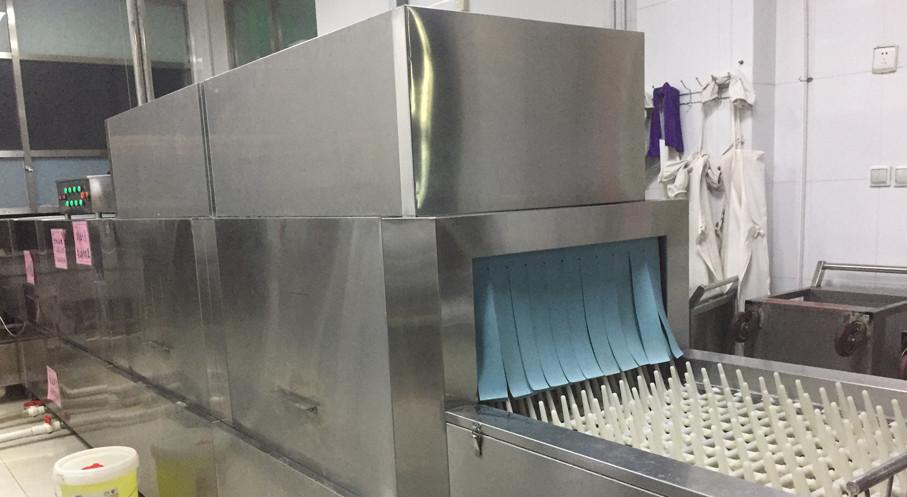
Xinle Zhongshan Middle School in Hebei Province was founded in May 1995. It was taken over by the state in 1997 and restructured into a public-run and privately-aided school in 1999; in 2007, it was fully transferred to Xinhua Bookstore, opening a new chapter in the school's development. The school boasts modern school-running conditions and upholds the philosophy of first-class management, first-class teacher quality and first-class teaching quality, radiating new vitality and vigor. Being in such an environment inspires people, and the aspirations and will of teachers and students are tempered and polished. Based on the school's development plan, our school has signed a commercial dishwasher purchase agreement with your company. Currently, the school has about 1,500 diners, and the canteen provides regular catering services. As the core equipment for tableware cleaning in the canteen, the cleanliness of the dishwasher is directly related to the food safety and health of all teachers and students, and is also a key link in implementing the requirements of campus food safety management. The long-line dishwasher (model: R590-3M) equipped in the school canteen has been in high-load operation for a long time. Food residues and oil stains remaining on the tableware are easy to adhere to the internal components of the dishwasher (such as the conveyor chain, spray arm, inner tank, etc.). If cleaning is not timely and thorough, it will not only affect the washing efficiency and service life of the dishwasher, but also breed harmful microorganisms such as bacteria and mold, posing potential food safety hazards, which is contrary to the school's educational philosophy and campus safety management requirements. To standardize the dishwasher cleaning process, eliminate potential safety hazards, and ensure the dietary hygiene of teachers and students, this overall cleaning plan is specially formulated in combination with the actual catering situation of the school canteen, equipment specifications and relevant hygiene standards.
II. Basic Project Information
2.1 School and Dining Overview
The number of diners in the school is about 1,500; the types of tableware are mainly stainless steel portion basins and stainless steel round bowls; the dining time is clearly defined as: breakfast 07:00-08:30, lunch 11:40-13:00, dinner 17:30-18:00. Cleaning work should be reasonably arranged in combination with the dining time to avoid affecting normal catering.
2.2 Core Requirements
(1) Hygiene Requirements: Strictly follow the HACCP system standards and relevant national hygiene standards to ensure uniform cleaning effect of the dishwasher and meet the standards for tableware cleaning and disinfection;
(2) Equipment Requirements: Cooperate with the automatic meal collection function of the dishwasher, do a good job in manual sorting, garbage disposal and recycling. The washed tableware should be immediately transported to each meal selling area or put into the cupboard to ensure the rapid turnover of tableware;
(3) Core Needs: Solve the four core problems concerned by the school, namely creating a good dining environment, quickly handling a large amount of garbage, efficiently cleaning a large number of tableware, and standardizing the meal collection link. Optimize the cleaning plan according to the actual needs of the school.
2.3 Dishwasher Specifications and Parameters
The specific specifications of the commercial dishwasher for this cleaning are as follows: the name is long-line dishwasher, model R590-3M, size 5000*950*1500mm, and the configuration includes four functions: slag removal, cleaning, secondary cleaning and rinsing, which is the core equipment to ensure tableware cleaning and disinfection.
III. Cleaning and Relevant Processes of the Operation Room
3.1 Core Cleaning Process of the Dishwasher
Through the conveying system, the plates, tableware, cups and other tableware are transported into the dishwasher by the conveyor chain row. First, they enter the circulating hot water flushing area, where the upper and lower rows of spray arms spray washing water for flushing, and at the same time, the external slag removal device discharges the residues on the surface of the tableware; then they enter the rinsing area with strong high-temperature flushing, and finally enter the high-temperature clean water rinsing area, completing the cleaning and disinfection of the tableware in the whole process to ensure compliance with hygiene standards.
3.2 Subdivided Operation Processes
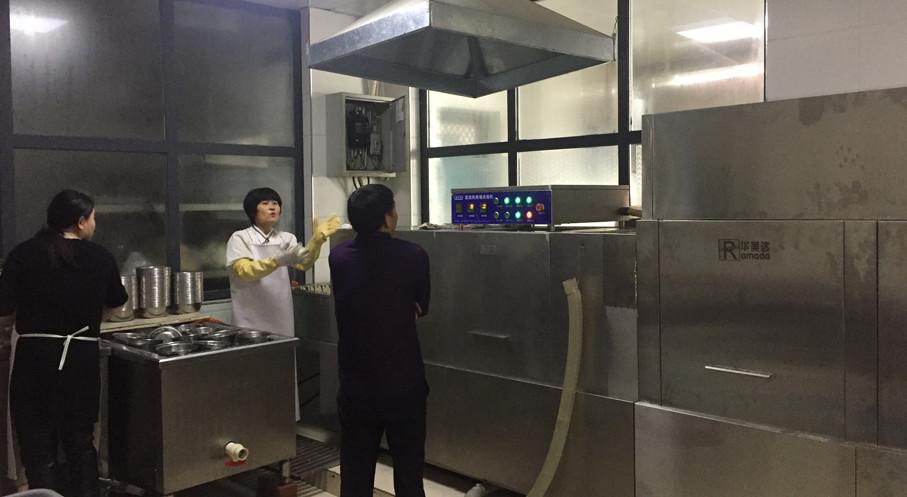
01 Tableware Pre-washing: Directly pour the garbage in the tableware into the sink, and the water in the sink directly flows into the garbage disposal machine to complete the preliminary residue cleaning and avoid residues entering the dishwasher and affecting the cleaning effect;
02 Tableware Cleaning: Put the pre-washed tableware directly into the dishwasher, start the equipment, and complete the cleaning, secondary cleaning and rinsing processes according to the preset program to ensure that oil stains and residues are completely removed;
03 Tableware Collection: Quickly put the cleaned and disinfected tableware on the trolley and send it back to the restaurant in time to realize the rapid turnover of tableware and adapt to the dining needs of each period;
04 Garbage Disposal: Through the external slag removal device of the dishwasher, the garbage generated during the cleaning process is automatically collected and then centrally treated, which is both efficient and hygienic;
05 Workstation Allocation: Flexibly adjust the number of pre-washing workstations according to the fluctuation of the number of diners to ensure the efficient progress of the pre-washing link without affecting the overall operation rhythm of the dishwasher.
1.2 Core Objectives
(1) Thoroughly remove food residues, oil stains, scale, microorganisms and other impurities inside and outside the dishwasher, ensure that the dishwasher meets the cleaning standards, and comply with the requirements of the National Food Safety Standard General Hygienic Specifications for Catering Services (GB 31654-2021) and the National Food Safety Standard Disinfected Tableware (Drinking Utensils) (GB 14934-2016);
(2) Optimize the operation status of the dishwasher, reduce the incidence of equipment failures, extend the service life of the equipment, ensure the efficient operation of the whole process of tableware cleaning, disinfection and drying in the canteen, and adapt to the dining needs of about 2,700 people in the school.




 English
 Chinese
 French
 German
 Russian
 Italy
Italy Spain
Spain Portugal
 Japanese
 Korean
 Arabic
 Traditional